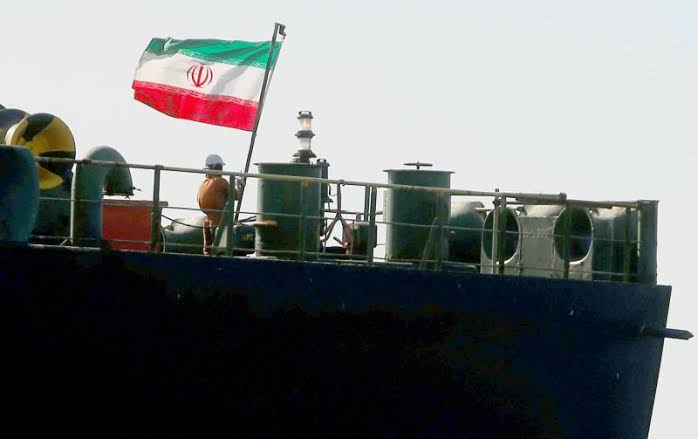
The Trump administration has launched a sweeping new economic offensive against Iran, expanding the threat of secondary sanctions to the shipping sector and targeting nearly 60 companies, individuals and vessels accused of helping move Iranian oil.
Dubbed “Operation Economic Outcast” by the US Treasury, the campaign is designed to choke off revenues sustaining Tehran.
US Treasury Secretary Scott Bessent described it as an economic “D-Day”, while President Donald Trump has warned countries continuing to trade with Iran could face economic isolation.
The Office of Foreign Assets Control has also sanctioned companies, vessels and individuals across the UAE, Hong Kong, China, Singapore, Switzerland and Europe over alleged involvement in Iran’s oil trade and shadow fleet.
Among the maritime targets are UAE-based broker Mohammad Ahmed Suhil Fattouh, known as “Captain Hamzah”, who Treasury says has arranged shadow-fleet vessels for sanctioned Iranian interests, and Ukrainian national Ivan Obukhov and his UAE company Foscom FZE, accused of facilitating Iranian military oil shipments and processing more than $100 million in cryptocurrency payments since 2023.
Singapore-based Azure Shipping Pte. Ltd. was sanctioned over alleged ship-to-ship services for sanctioned vessels, while bunkering companies operating from Hong Kong and Dubai were targeted for supplying fuel to vessels carrying Iranian crude and petroleum products.
The US Treasury cited the tanker MEDNA (IMO 9281683), alleging that the network arranged bunkering services for the vessel in 2026.
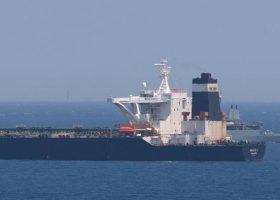
Five more tankers were designated: SIFRA (IMO 9185346), G SILVER (IMO 9139696), QUANTUM HOPE (IMO 9233650), VOYAGE ELITE (IMO 9286138) and TELA (IMO 9189110).
Washington said QUANTUM HOPE and VOYAGE ELITE had transported millions of barrels of Iranian oil to China since early 2026, while the other vessels had carried Iranian crude or petroleum products to markets including Southeast Asia.
The measures raise the stakes for shipowners, charterers, traders, brokers, bunker suppliers and financial institutions.
Foreign banks that knowingly facilitate significant transactions involving designated parties could also face restrictions on access to the US financial system.
The campaign adds another layer of risk for shipping already exposed to disruption around the Strait of Hormuz, attacks on commercial vessels and soaring freight and insurance costs.