By Nasir Anas Mohammed
The Minister of Marine and Blue Economy, Dr Adegboyega Oyetola, recently announced that the United States Coast Guard has lifted the Condition of Entry (CoE) imposed on vessels arriving in the United States from Nigeria. Oyetola described the development as a major breakthrough for Nigeria’s maritime sector and reaffirmed the Federal Government’s commitment to maintaining Nigeria as a safe, secure and competitive destination for international shipping.
The lifting of the restriction is one of the most significant developments in Nigeria’s maritime sector in recent years. It brings to an end a 12-year regime, imposed in June 2014, under which vessels calling at Nigerian ports faced enhanced security requirements before proceeding to the United States.
The development therefore represents a significant milestone in the Federal Government’s efforts to strengthen maritime security, improve port competitiveness and enhance Nigeria’s standing in the global maritime industry. It also reflects sustained assessments of Nigeria’s maritime-security arrangements and improvements in the implementation of the International Ship and Port Facility Security (ISPS) Code. But this is about more than the removal of an administrative inconvenience for ships. It represents an important vote of confidence in the progress Nigeria has made in securing its maritime domain.
For that reason, the Minister of Marine and Blue Economy deserves commendation, as do the Nigerian Maritime Administration and Safety Agency (NIMASA), the Nigerian Ports Authority (NPA), the Nigerian Navy, port terminal operators, security agencies and other stakeholders whose sustained efforts contributed to this outcome.
Twelve Years of Paying a Price
From my experience in port operations and security, it is important to appreciate what the restriction actually meant for Nigeria. A port’s competitiveness is not determined merely by the availability of quays, cranes, channels or cargo. International shipping operates on the principles of security, predictability, speed and cost. A weakness in any one of these areas can influence the commercial decisions of shipowners, charterers, insurers, freight forwarders and cargo owners.
For 12 years, Nigeria carried the burden of an additional security designation.
The immediate consequence was that vessels travelling from designated Nigerian ports to the United States were subjected to additional security procedures and scrutiny. Although these measures were directed at individual vessels, their commercial consequences extended beyond the vessels themselves.
Additional inspections, documentation, security arrangements and possible delays translate into costs. In an industry where vessel time is money, even relatively small delays can become commercially significant when multiplied across numerous voyages. The restriction also contributed to a perception problem.
Nigeria was effectively being treated differently from ports that met the expected international security threshold. That distinction matters. Shipping lines do not assess ports solely on cargo volumes. They consider risk, reliability, turnaround time, regulatory predictability, insurance implications and the likelihood of disruption.
The economic cost, therefore, should not be measured simply by asking how much Nigeria spent on additional inspections or security procedures. The larger cost was the opportunity lost.
Nigeria potentially forfeited opportunities for greater direct shipping connectivity, lower logistics costs, increased port calls, stronger trans-shipment prospects, maritime investment and a larger share of regional cargo.
A reputation for elevated security risk can influence routing decisions long after the original security concerns have been addressed. It can also reinforce the tendency of cargo owners and shipping lines to consider alternative regional gateways. This is particularly important because Nigeria is competing in an increasingly sophisticated West African maritime environment.
The emergence of deep-sea facilities such as Lekki, alongside continuing investment in port infrastructure, demonstrates that Nigeria has the physical ambition to become a major maritime hub. But infrastructure alone cannot deliver that ambition. A modern port must be safe, efficient, commercially attractive and internationally trusted.
The Opportunity Before Nigeria
The lifting of the restriction removes an important layer of friction and, potentially, an important psychological barrier. The development is expected to have positive implications for the cost and competitiveness of shipping through Nigerian ports. Those benefits could manifest in several ways.
First, greater confidence among international shipowners and operators. The removal of the US security restriction sends a powerful message to the international maritime community that Nigeria’s security regime has improved sufficiently to meet an important international benchmark.
Second, potential reductions in voyage-related costs and delays. The elimination of additional security procedures could improve vessel turnaround and schedule reliability, particularly for ships operating on international routes involving the United States.
Third, greater attractiveness to investors. Investors look for evidence that regulatory and operational risks are being systematically reduced. A positive security assessment by the US Coast Guard is the kind of external validation that can strengthen investor confidence in Nigeria’s maritime operating environment.
Fourth, stronger prospects for Nigerian ports as regional gateways. If improvements in security are matched by better efficiency, road and rail connectivity and cargo-handling performance, Nigeria can capture more regional cargo and develop a stronger hub-and-spoke maritime economy.
Fifth, growth of the wider blue economy. Improved maritime confidence can support the development of ship repair, maritime services, logistics, warehousing, insurance, marine technology, bunkering, offshore services and employment.
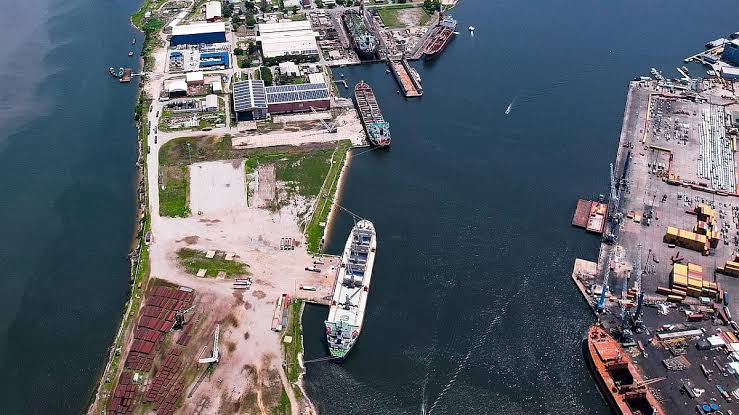
The recent long-term investment by MSC in the development of Snake Island Port has also been cited as an indication of the scale of international commercial interest that can follow improvements in Nigeria’s maritime infrastructure and operating environment.
But there is a crucial caveat. The lifting of the restriction is not the destination. It is the reward for progress — and the beginning of a new responsibility.
We Must Not Return to Complacency
The greatest mistake Nigeria could make now would be to interpret the US decision as the end of the maritime-security challenge. It is not.
The US Coast Guard has not given Nigeria permanent immunity from international scrutiny. Rather, the decision recognises measurable improvement. That distinction is critical. Maritime security is not an event; it is a continuous process. The systems and standards that earned international confidence today must be maintained and strengthened tomorrow.
The first responsibility rests with NIMASA, as the designated authority responsible for implementation of the ISPS Code. NIMASA must maintain rigorous and regular compliance audits of port facilities, strengthen intelligence-led inspections, insist on proper Port Facility Security Plans and ensure that corrective actions are actually implemented rather than merely documented. The repeated assessments of Nigeria’s ISPS compliance underline the importance of sustained verification.
The NPA, on its part, must continue to place security at the heart of port management rather than treating it as an auxiliary function. Access control, perimeter security, surveillance, patrols, lighting, communications, emergency response and coordination among security agencies must be continuously tested.
Technology Must Become Central
Nigeria also needs to make technology a central component of port security. Integrated port-security systems should incorporate modern CCTV, access-control systems, vessel monitoring, cargo-risk profiling, automated identification technologies, intelligence sharing and, increasingly, robust cybersecurity. The maritime industry is becoming ever more digitally dependent. A physically secure port can still be vulnerable if its information systems are compromised.
The Nigerian Navy and other maritime-security agencies must also sustain the gains achieved in securing Nigerian waters. A secure port cannot exist in isolation from a secure approach channel, anchorage and surrounding maritime domain. Piracy, sea robbery, illegal bunkering, oil theft, trafficking and other maritime crimes remain threats to the attractiveness of Nigerian waters.
Terminal and port-facility operators likewise have a major responsibility. Security cannot be outsourced entirely to government agencies. Every terminal operator must take ownership of its security obligations, maintain competent security personnel, conduct regular drills, vet staff and contractors, protect restricted areas and promptly report suspicious activities. Shipping lines, ship agents, freight forwarders, truck operators and other private-sector participants must equally comply with security requirements. Security is a shared responsibility across the entire port community.
Finally, the Federal Government must ensure that the regulatory environment remains predictable. Security gains can easily be undermined by bureaucratic delays, arbitrary procedures, poor inter-agency coordination, corruption or inconsistent enforcement.
Security Must Translate Into Port Competitiveness
There is another important lesson Nigeria should draw from this episode: security and efficiency must no longer be treated as separate conversations. A secure port that takes excessively long to process cargo is not competitive. An efficient port that is insecure is equally unattractive. The objective should therefore be a Nigerian port system in which a vessel can arrive safely, berth predictably, handle cargo efficiently, comply transparently and sail on schedule. Achieving this will require deeper collaboration among NIMASA, NPA, the Nigerian Navy, Customs, the Police, immigration authorities, terminal operators, shipping companies and other stakeholders.
Nigeria should also establish a permanent mechanism for monitoring its international maritime-security standing, supported by clear performance indicators and early-warning systems. We should not wait for another foreign authority to identify weaknesses before responding.
There is also a public-affairs dimension to this achievement. Nigeria should actively communicate the progress it has made — not through propaganda, but through credible evidence. International shipping companies need reliable information about port security, turnaround times, infrastructure, connectivity, regulatory reforms and operational performance. A country’s maritime reputation is an economic asset.
From a Reputation of Risk to a Reputation of Reliability
Having served within the port system, I regard the lifting of this 12-year restriction as a moment of both satisfaction and reflection. For years, Nigerian maritime stakeholders operated under the shadow of a security designation that affected how our ports were perceived internationally. The removal of that restriction represents a vindication of the principle that sustained institutional effort can eventually change international perceptions.
The Minister of Marine and Blue Economy deserves credit for providing political leadership at this important stage, while the professionals and institutions responsible for the painstaking technical work also deserve recognition. But the real test begins now.
Nigeria must convert this regulatory and diplomatic success into lower logistics costs, greater shipping connectivity, faster vessel turnaround, increased investment, more maritime jobs and stronger participation in global trade. We must also resist the temptation to celebrate today and relax tomorrow. The international maritime industry does not reward sentiment. It rewards reliability. If Nigeria can sustain the security standards that earned this recognition while simultaneously improving port infrastructure, automation, cargo clearance, road and rail connectivity, channel management and operational efficiency, the country can transform this development into a much larger economic opportunity. The ultimate objective should not merely be that the United States has removed the additional security restriction on vessels from Nigeria. The objective should be for international shipping companies to say something even more valuable about Nigeria: this is a country whose ports are safe, secure, efficient, predictable and worth doing business with.
That is the reputation Nigeria must now build — and protect.
Mohammed is a former General Manager, Security at the Nigerian Ports Authority.