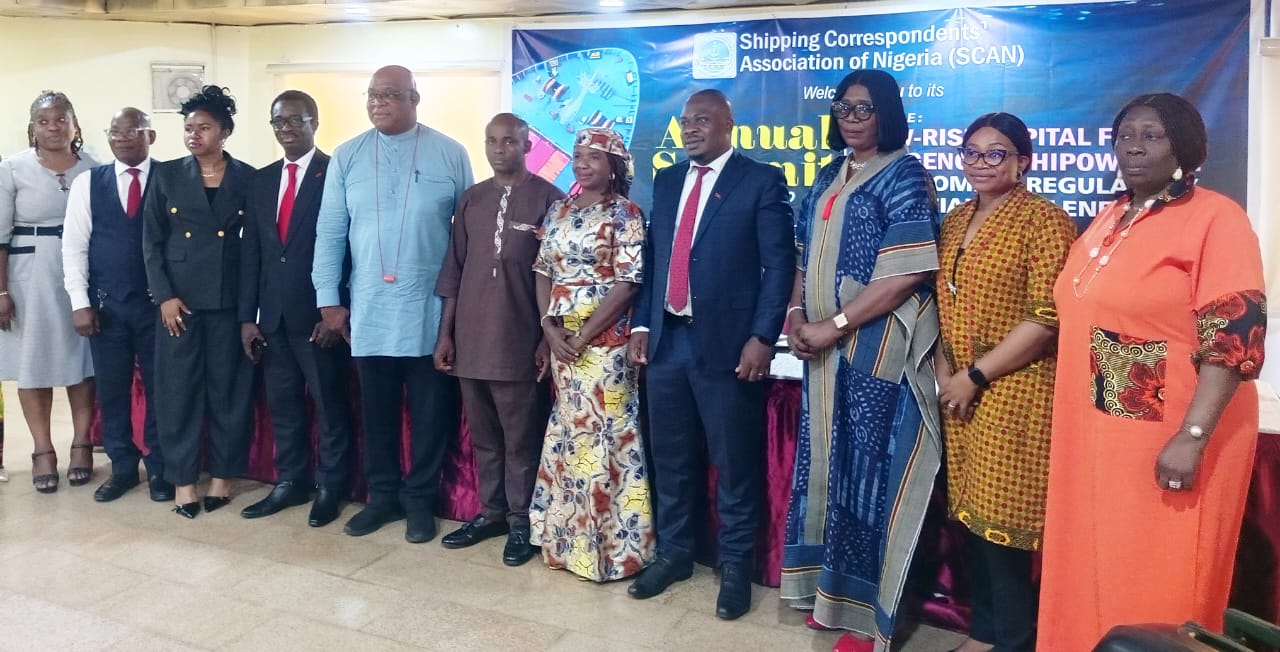
The Federal Government and maritime stakeholders have called for affordable, long-term financing and regulatory reforms to boost indigenous ship ownership and strengthen Nigeria’s shipping industry.
The call was made at the Shipping Correspondents Association of Nigeria (SCAN) Annual Summit in Apapa, Lagos, on Thursday, 29 October 2026, where participants identified high lending rates, regulatory bottlenecks and limited access to cargo as major barriers to local operators’ growth.
The Minister of Marine and Blue Economy, Dr Adegboyega Oyetola, stressed the need for collaboration among government, financial institutions, regulators and shipowners to unlock low-risk capital for the sector.
Oyetola said sustainable maritime financing required predictable regulations, credible business plans, transparent funding arrangements, effective insurance, competent management and reliable revenue streams. He urged banks to develop financing products tailored to the industry’s commercial realities, including vessel values, charter contracts, projected cash flows and operating costs.
The Minister, who was represented by the Director of Press and Public Relations, Anastasia Ogbonna, reaffirmed the government’s commitment to expanding indigenous participation beyond the disbursement of the Cabotage Vessel Financing Fund (CVFF), citing plans to improve maritime safety, develop Nigerian seafarers and establish a commercially driven national shipping line through a public-private partnership.
The proposed initiative, he said, would combine private capital, professional management and international expertise to increase Nigerian vessel ownership, create jobs and expand opportunities for local seafarers.
Former Director-General of the Nigerian Maritime Administration and Safety Agency (NIMASA), Temisan Omatseye, however, argued that indigenous shipping could only become competitive through a private sector-driven model and access to cheaper financing.
He said Nigerian shipowners faced a major disadvantage because domestic lending rates could reach 25 per cent, compared with rates as low as two per cent available to foreign operators, who could secure up to 85 per cent financing abroad.
According to Omatseye, the disparity, compounded by stringent collateral requirements, has left local operators struggling to compete with foreign interests in transporting Nigerian commodities.
He urged government agencies, including the National Planning Ministry and the Nigerian Content Development and Monitoring Board (NCDMB), to provide shipowners with reliable, multi-year data on cargo demand and the operational plans of international oil companies. Such information, he said, would help banks develop suitable financing models and support private sector-led vessel acquisition.
In his goodwill message, United Bank for Africa’s Apapa Regional Manager, Nelson Edoye, identified limited access to patient capital and regulatory complexities as major obstacles to indigenous shipping. He called for innovative financing arrangements to attract sustainable investment and strengthen Nigeria’s position in the global maritime industry.
Earlier, SCAN President Moses Ebosele said high vessel acquisition and maintenance costs, multiple charges, administrative delays, inadequate infrastructure and inconsistent policy implementation continued to undermine local shipowners despite Nigeria’s vast maritime potential.
He called for improved port efficiency, harmonised charges, stronger enforcement of maritime laws and effective utilisation of the CVFF to ensure that policies supporting indigenous operators deliver tangible results.
Ebosele also advocated partnerships between Nigerian and international shipping companies, alongside increased investment in seafarer training, maritime infrastructure and local ship repair facilities.
He stressed that stronger indigenous shipping would help Nigeria retain more revenue from maritime transportation, conserve foreign exchange, create jobs and strengthen economic resilience.
The SCAN president urged the Federal Government, National Assembly, regulators, financial institutions and private sector operators to translate summit deliberations into measurable actions, warning that policy commitments must be matched by effective implementation.
He also challenged maritime journalists to promote informed public debate, scrutinise policies and hold relevant authorities accountable.
The summit ended with a call for coordinated action to improve access to capital, reduce operational barriers and position Nigerian shipowners to compete more effectively in domestic and international shipping.
Related Posts:

Sirika to address stakeholders over suspension of Nigeria Air
NIMASA DG Dayo Mobereola holds maiden interactive session with stakeholders

Delay in submission of NPA probe panel report causing maritime industry crisis — Stakeholders